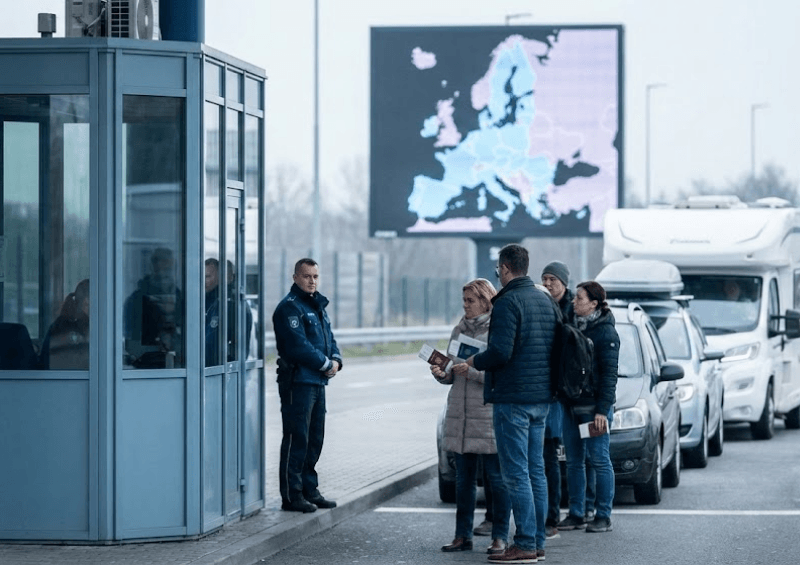
Schengen travel rules in 2026 are changing. 10 European countries will continue temporary internal border checks due to security and migration risks. Learn dates, impacts, and what travel agents must prepare for seamless client travel.
If your clients are planning Europe travel in 2026—especially multi-country Schengen itineraries—this update is critical for your bookings, advisories, and pre-departure guidance.
While the Schengen Zone is known for passport-free movement, several member states have officially extended or reintroduced temporary internal border controls into early and mid-2026. These measures are legally permitted during heightened security, migration pressure, or major international events.
For B2B travel agents and corporate planners, understanding where, when, and why these checks apply will help prevent delays, denied boarding issues, and last-minute disruptions.
Why Are Schengen Border Checks Continuing in 2026?
Authorities across Europe cite a combination of factors, including:
Irregular migration pressure on internal borders
Terrorism and organised crime risks
Geopolitical tensions linked to Ukraine and the Middle East
Major international events increasing crowd density
Protection of critical infrastructure
These controls do not close borders, but they allow police and immigration authorities to verify documents at selected land, air, and sea crossings.
Schengen Countries with Confirmed Border Controls in 2026
1. Austria
Effective: 16 December 2025
Valid until: 15 June 2026
Austria continues checks due to migration flows along the Balkan route and asylum system strain.
Agent advisory:
Clients entering from Slovakia, Hungary, Slovenia, or Czechia must carry passports and allow buffer time.
2. Slovenia
Effective: 22 December 2025
Valid until: 21 June 2026
Security preparations for the Italy Winter Games and concerns over Balkan migration routes drive the extension.
Agent advisory:
Expect slower crossings at Croatia and Hungary borders during peak travel periods.
3. Italy
Effective: 19 December 2025
Valid until: 18 June 2026
Italy cites terrorism risks, large-scale events like the Jubilee Year, and regional conflicts.
Agent advisory:
Ensure ID readiness for clients entering from Slovenia and neighbouring states.
4. Netherlands
Effective: 9 December 2025
Valid until: 8 June 2026
High asylum volumes and smuggling activity have prompted extended internal controls.
Agent advisory:
Passport checks may occur at Belgium and Germany borders and select airports.
5. Denmark
Effective: 12 November 2025
Valid until: 11 May 2026
Denmark remains on alert due to sabotage threats and organised crime concerns.
Agent advisory:
Land and sea border checks with Germany remain active.
6. Norway
Effective: 12 November 2025
Valid until: 11 May 2026
Focus remains on safeguarding energy infrastructure and national security.
7. Sweden
Effective: 12 November 2025
Valid until: 11 May 2026
Rising cross-border crime and extremist threats drive continued screening.
Agent advisory:
Document checks may apply across land, air, and sea entries—especially from Denmark.
8. France
Effective: 1 November 2025
Valid until: 30 April 2026
France highlights terrorism risks, antisemitic incidents, and migrant smuggling routes.
Agent advisory:
Checks may occur on all land borders and select air and sea entry points.
9. Poland
Effective: 5 October 2025
Valid until: 4 April 2026
Migration pressure from Belarus and western borders remains high.
Agent advisory:
Clients entering from Germany or Lithuania should expect document verification.
10. Germany
Effective: 16 September 2025
Valid until: 15 March 2026
Germany continues checks due to high irregular migration and asylum capacity pressure.
Agent advisory:
Controls may apply across borders with nine neighbouring countries.
What B2B Travel Professionals Should Advise Clients
For travel within the Schengen Area in early to mid-2026:
Always carry a passport or valid national ID
Expect occasional delays at land borders and airports
Add buffer time for inter-country transfers
Monitor local advisories before ticketing and departure
These measures are temporary and subject to review as security conditions evolve.
Key Takeaway for Travel Agents & Corporate Planners
Schengen travel in 2026 remains open—but not frictionless. Temporary border controls add an operational layer that travel professionals must actively manage through client education, itinerary planning, and proactive communication.
Agents who stay informed will reduce disruptions, protect margins, and deliver smoother Europe travel experiences.
Want more travel updates like this?Follow our updates at blog.agentbazar.in and transform how you support your clients at every stage of travel.
Follow us on Facebook, X (Twitter), Instagram, and YouTube for the latest travel updates and insights!
About the Agent Bazar Blog
The Agent Bazar Blog is your trusted source for industry news, airfare trends, visa updates, and insights tailored for B2B travel agents, consolidators, corporate travel planners, and tour operators.
Our goal is to support travel professionals with timely, actionable content that enhances business growth, improves efficiency, and keeps you informed in a fast-changing travel industry.
Explore our articles, stay ahead with vital updates, and make smarter decisions for your travel business.
About Agent Bazar
Agent Bazar is a next-generation series fare aggregator and B2B airfare marketplace in India, developed by Tripforu Holidays Pvt Ltd (est. 2016).
Backed by over 15 years of industry experience, the platform specializes in fixed departure fares across 300+ sectors in India and key Asian countries.
With a growing network of over 10,000 registered travel agents, Agent Bazar connects consolidators and sellers with agents through a zero-commission model, unlike traditional portals that charge 5–8% in fees.
The platform empowers travel agents and consolidators with direct access to reliable inventory, real-time fare discovery, and simplified group booking tools.
🌐 Visit: agentbazar.in