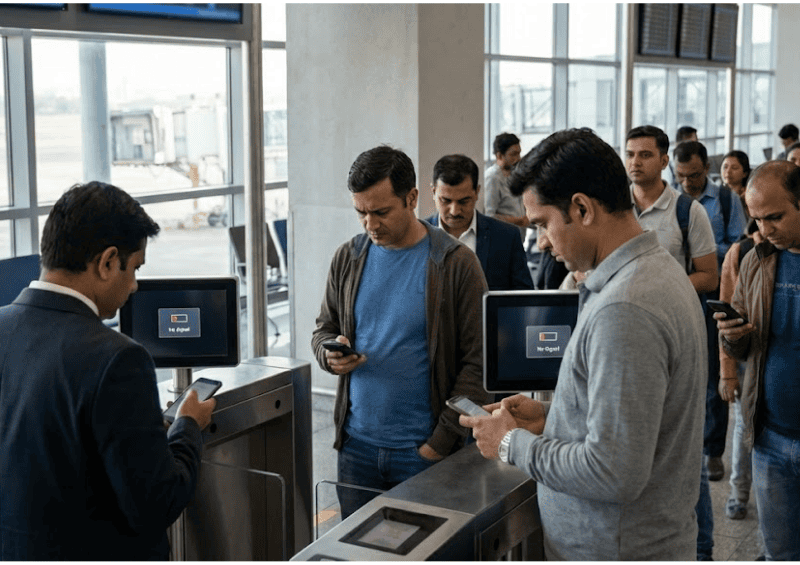
New Navi Mumbai International Airport mobile connectivity issues arise as telecom operators and airport management clash over infrastructure access and fees, affecting 4G/5G network quality and traveler satisfaction — critical insights for B2B travel and airline professionals.
Navi Mumbai International Airport Faces Telecom Connectivity Roadblocks
Impacting traveler experience and raising industry concerns
The newly operational Navi Mumbai International Airport (NMIA) — envisioned as a strategic aviation hub to ease congestion at Mumbai’s existing airport — is encountering a high-visibility challenge early in its journey: poor or absent mobile network coverage within the terminal. This has sparked friction between telecom service providers and the airport operator, affecting passenger satisfaction and drawing attention from industry stakeholders.
📶 Mobile Connectivity: A Growing Pain at NMIA
Since commercial operations began in late December 2025, passengers have reported unreliable mobile services — including dropped calls and sluggish internet — from major carriers like Airtel, Jio, and Vodafone Idea as soon as they enter the terminal. These issues aren’t due to technical glitch but stem from a commercial dispute over who controls telecom infrastructure on airport property.
📌 What’s Behind the Network Silence?
At the heart of the problem is a disagreement between Navi Mumbai International Airport Ltd (NMIAL) — managed by Adani Airports Holdings Ltd — and private telecom operators over Right of Way (RoW) permissions and infrastructure fees. The Cellular Operators Association of India (COAI) has formally written to the Department of Telecommunications (DoT), alleging that NMIAL is restricting operators’ ability to install their own 4G/5G equipment inside the airport COAI contends that:
NMIAL has not granted statutory RoW permission for independent telecom deployment as per required rules.
The airport is mandating the use of its own in-building telecom system (IBS) at steep monthly charges, reportedly around ₹92 lakh per operator — far above typical deployment costs.
The setup risks creating a monopolistic arrangement that could undermine competitive neutrality and comply poorly with the Telecommunications Act, 2023 and RoW rules.
📉 Passenger Experience and Industry Implications
For business travelers, corporate groups, airline crews, and travel planners, seamless digital connectivity at airports isn’t a luxury — it’s a necessity. Delays in network access can disrupt communication, itinerary updates, mobile check-ins, and client support services. Frustrated passengers have taken to social platforms to highlight the issue, emphasizing how unreliable mobile access negatively influences their airport experience. (This challenge is notable not just for travelers but for aviation and telecom strategy leaders, as it highlights the intersection of infrastructure policy, commercial negotiations, and customer expectations in modern airport operations.
🧠 Airport Operator’s Stance
NMIAL has denied rejecting RoW permissions outright and says it’s in ongoing discussions with operators. The airport maintains that its in-terminal network solution was offered to all carriers at industry-aligned rates, and claims that telecom companies have yet to formally respond to this proposal.
However, until a resolution is reached, travelers may continue to experience poor mobile service — a disconnect counterintuitive to the “smart airport” vision NMIA aspires to embody.
📊 Wider Regulatory and Competitive Context
The dispute has drawn attention from industry observers and policymakers alike:
Telecom leaders urge the DoT to enforce existing access rules for public infrastructure. Lawmakers have criticized the airport’s approach, framing the situation as protective of monopoly profits over passenger convenience.This debate underscores a broader trend: digital connectivity at transportation hubs is now a strategic asset, where regulatory clarity and fair access policies are crucial to sustaining competitive markets and superior traveler experiences.
🛫 Key Takeaways for Travel & Aviation Professionals
Traveler expectations now include reliable mobile and data coverage as part of the airport experience.
Commercial disputes over infrastructure access can quickly spill into public perception and brand impact.
B2B travel agents and corporate travel planners should be prepared with passenger advisories and alternatives (e.g., airport Wi-Fi guidance) if connectivity issues persist.
Airline operations and crew communication may also need contingency planning for periods of weak mobile coverage in terminals.
Want more travel updates like this? Follow our updates at blog.agentbazar.in and transform how you support your clients at every stage of travel.
Follow us on Facebook, X (Twitter), Instagram, and YouTube for the latest travel updates and insights!
About the Agent Bazar Blog
The Agent Bazar Blog is your trusted source for industry news, airfare trends, visa updates, and insights tailored for B2B travel agents, consolidators, corporate travel planners, and tour operators.
Our goal is to support travel professionals with timely, actionable content that enhances business growth, improves efficiency, and keeps you informed in a fast-changing travel industry.
Explore our articles, stay ahead with vital updates, and make smarter decisions for your travel business.
About Agent Bazar
Agent Bazar is a next-generation series fare aggregator and B2B airfare marketplace in India, developed by Tripforu Holidays Pvt Ltd (est. 2016).
Backed by over 15 years of industry experience, the platform specializes in fixed departure fares across 300+ sectors in India and key Asian countries.
With a growing network of over 10,000 registered travel agents, Agent Bazar connects consolidators and sellers with agents through a zero-commission model, unlike traditional portals that charge 5–8% in fees.
The platform empowers travel agents and consolidators with direct access to reliable inventory, real-time fare discovery, and simplified group booking tools.
🌐 Visit: agentbazar.in