Middle East airspace disruptions force Emirates, IndiGo, Qatar Airways, Air India, and Etihad to resume limited flights. Key updates on rerouting, delays, repatriation flights, and travel advisory impacts for agents.
Current Situation: Partial Recovery After Major Disruptions
A temporary ceasefire has brought cautious relief to the aviation sector across the Middle East. However, operations remain highly restricted and unstable.
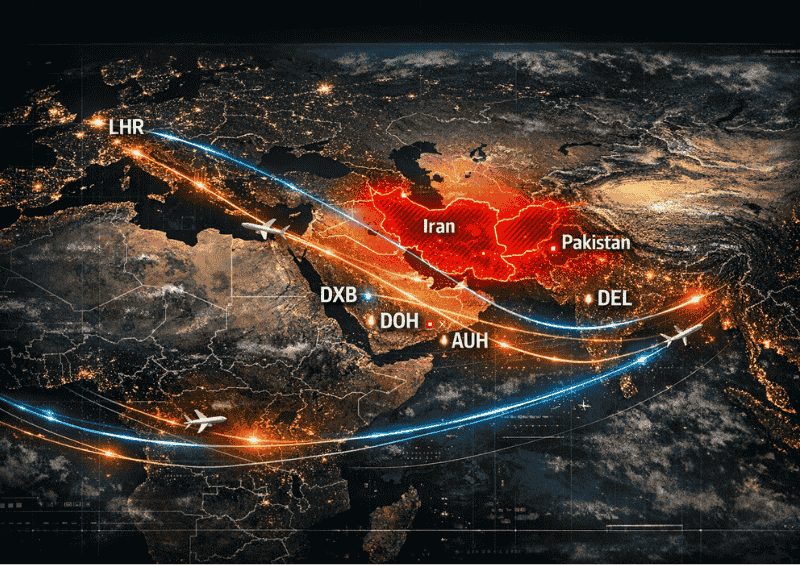
Major hubs including Dubai (DXB), Doha (DOH), and Abu Dhabi (AUH) are operating under controlled conditions, with intermittent closures and strict regulatory oversight.
Airlines are not fully operational yet. Instead, they are:
Running limited schedules
Prioritizing repatriation and cargo
Operating under government-approved corridors
Airline Operations: Who Has Resumed What?
IndiGo & Air India
Operating ~50 essential flights between India and the Gulf
Focus on:
Repatriation passengers
Critical cargo
Limited availability for general bookings
Qatar Airways
Suspended multiple routes across Asia and Europe
Operating select flights under revised schedules
Strong dependency on airspace clearance
Emirates & Etihad Airways
Gradual and controlled resumption
Priority given to:
Existing bookings
Evacuation flights
Full commercial operations still suspended
flydubai & Regional Carriers
Running emergency flights only
Passenger movement strictly controlled
No walk-in travel allowed without confirmation
Airspace Changes: Major Rerouting Impact
Due to restrictions over Iran and Pakistan, airlines are using alternative routes:
New Routing Pattern:
Arabian Sea
Oman airspace
Egypt corridors
Impact:
Delhi → London flight time increased
Earlier: ~8 hours
Now: 12+ hours
Operational Consequences:
Higher fuel costs
Aircraft rotation delays
Crew scheduling challenges
Increased fare volatility
Government & Regulatory Control
Aviation authorities are tightly controlling operations:
Key Directives:
Passengers must NOT go to airports without confirmed tickets
Flights operate only after security clearance
Airlines contact passengers directly for travel approval
Regulatory Bodies Involved:
UAE General Civil Aviation Authority (GCAA)
Qatar Civil Aviation Authority (QCAA)
Embassy advisories (US, India, EU)
Impact on Passengers & Travel Agents
Passenger Challenges:
Long delays and uncertainty
Limited seat availability
Frequent cancellations
For Travel Agents (Critical Insights):
Expect high reissue and refund workload
Increased client queries on:
Route changes
Transit delays
Visa validity due to delays
B2B Strategy: How Agents Should Respond
1. Proactive Communication
Inform clients about:
Possible delays
Route changes
Documentation requirements
2. Booking Strategy
Avoid tight connections
Prefer flexible fare classes
Monitor airline advisories daily
3. Operational Adjustments
Keep backup routing options
Prioritize airlines with confirmed operations
Track airspace changes in real-time
4. Revenue Opportunity
Repatriation and urgent travel demand is rising
Corporate and emergency travel segments active
Economic & Industry Impact
Airlines facing massive revenue loss
Tourism sector slowdown across Gulf & Europe routes
Cargo operations becoming a key revenue stream
What Happens Next?
Possible Scenarios:
Gradual normalization
Increased flights over next 2–3 weeks
Volatile operations
Sudden closures if tensions rise
New routing standards
Longer routes may remain temporarily
Summary: Limited Flight Resumptions
Airline / Authority
Status
Emirates
Limited flights, priority bookings
Etihad Airways
Cargo + repatriation only
IndiGo
Essential India-Gulf connectivity
Air India
Controlled international operations
Qatar Airways
Reduced and revised schedules
Dubai / Abu Dhabi Airports
Partial reopening
Ben Gurion Airport
Strict departure limits
Key Takeaway for Travel Professionals
This crisis highlights a critical reality:
Air travel is highly dependent on geopolitical stability.
For B2B travel professionals, success during such disruptions depends on:
Real-time information tracking
Flexible booking strategies
Strong client communication
The ability to adapt quickly will define competitive advantage in volatile markets.
Internal Training Reference
For onboarding junior staff on ticketing, PNR, baggage, and flight operations basics, refer to:
Want more travel updates like this? Follow our updates at blog.agentbazar.in and transform how you support your clients at every stage of travel.
Follow us on Facebook, X (Twitter), Instagram, and YouTube for the latest travel updates and insights!
About the Agent Bazar Blog
The Agent Bazar Blog is your trusted source for industry news, airfare trends, visa updates, and insights tailored for B2B travel agents, consolidators, corporate travel planners, and tour operators.
Our goal is to support travel professionals with timely, actionable content that enhances business growth, improves efficiency, and keeps you informed in a fast-changing travel industry.
Explore our articles, stay ahead with vital updates, and make smarter decisions for your travel business.
About Agent Bazar
Agent Bazar is a next-generation series fare aggregator and B2B airfare marketplace in India, developed by Tripforu Holidays Pvt Ltd (est. 2016).
Backed by over 15 years of industry experience, the platform specializes in fixed departure fares across 300+ sectors in India and key Asian countries.
With a growing network of over 10,000 registered travel agents, Agent Bazar connects consolidators and sellers with agents through a zero-commission model, unlike traditional portals that charge 5–8% in fees.
The platform empowers travel agents and consolidators with direct access to reliable inventory, real-time fare discovery, and simplified group booking tools.
🌐 Visit: agentbazar.in