IndiGo Flight Cancellations Disrupt Travel Across India
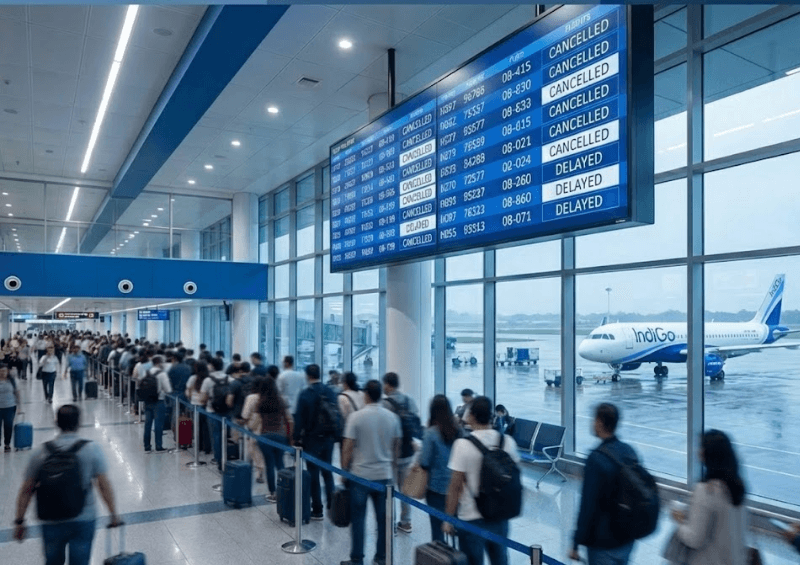
IndiGo’s mass cancellations and delays in early December 2025 — driven by FDTL rostering changes, crew shortages and system strain — disrupted major Indian hubs. A practical briefing for travel agents, consolidators and corporate travel teams.

Quick snapshot for travel partners

  • When: Early December 2025 (peak winter travel window).

  • Scale: Hundreds of cancellations and widespread delays over consecutive days; reports cite 200+ cancellations on specific days and thousands of passengers affected.

  • Regulator response: DGCA has launched a probe and asked IndiGo for a mitigation plan.

What happened — the short version

IndiGo’s network experienced severe instability across multiple major airports over a two-day period in early December. The airline curtailed a large tranche of flights and implemented temporary schedule changes as it struggled to balance crew availability, new duty rules, and operational pressures. Airports including Delhi, Mumbai, Bengaluru, Hyderabad and others reported concentrated cancellations and long queues for re-accommodation. 

Why this unfolded — the root causes travel pros should track

1. New FDTL rostering rules

From November 1, 2025, India’s updated Flight Duty Time Limitation (FDTL) rules increased mandatory rest and tightened night-landing allowances. While regulators intended these changes to improve safety and crew wellbeing, they forced airlines to rework rosters—and IndiGo appears to have been hit harder than peers during the transition. 

2. Acute crew shortages and attrition

Industry sources and reporting point to accelerated crew movement—some driven by international recruitment drives—and an existing pilot/cabin staffing gap. That combination reduced roster flexibility, especially when FDTL windows were applied

3. Operational friction and seasonal load

Winter schedules are tighter and airports busier. When rostering, minor tech glitches, or airspace congestion occur, knock-on effects magnify quickly in a hub-and-spoke network—creating cascading cancellations and long re-accommodation queues. IndiGo also mentioned technical and air-traffic constraints as compounding factors.

Immediate impacts for B2B travel agents and corporates

  • Re-accommodation headaches: Blocked inventory and long airport queues increased reliance on manual overrides and interline alternatives. Expect higher workload for agent support desks.

  • Price volatility: Last-minute market fares surged on key sectors as capacity tightened. For corporate travel buyers, policy breaching bookings may spike.

  • Customer service strain: Passengers reported poor communication and extended hold times—agents will need proactive outreach and clear advice to preserve relationships.

Practical playbook: how travel sellers and managers should respond now

A. Audit your impacted inventory immediately

Run a daily report for bookings on IndiGo within your window of travel (±3 days). Prioritise high-value clients and group bookings for urgent re-routing or refunds.

B. Offer alternatives before passengers reach the airport

Proactively propose alternate flights (other carriers or earlier/later departures), bus/rail last-mile options where feasible, and hotel solutions for overnight disruptions.

C. Tighten SLA and escalation paths with suppliers

Set clear escalation contacts with IndiGo/GDS account managers and document the fastest route for PNR re-issuance or refunds. Record response times and push for operational credits when service levels break.

D. Update corporate travel policies temporarily

Authorize exceptions for policy rules (e.g., vendor switching or premium rebooking) during the disruption window to reduce friction for travellers and TMC agents.

E. Communicate clearly and often

Use templated messages for SMS, email and WhatsApp that explain rights (refunds/re-routing), expected wait times, and a single point of contact. Calm, consistent communication retains trust.

Longer-term considerations for consolidators & corporate buyers

  • Stress-test supplier resilience: Add disruption scenarios to RFP evaluation criteria (crew-planning robustness, contingency slots, interline agreements).

  • Diversify carrier mix: Over-reliance on one large carrier increases systemic exposure during network shocks. Consider rebalancing allocations across carriers and modes.

  • Negotiate stronger contractual protections: Seek minimum recovery commitments, performance credits, and faster refund settlement clauses in future deals.

Takeaway — what travel professionals must do next

This incident is a timely reminder that regulatory shifts, workforce mobility, and seasonal demand combine to create acute operational risk. For agents, consolidators and corporate travel teams, the immediate priority is triage: identify affected clients, rebook or refund swiftly, and communicate proactively. Medium term, revisit supplier reliance, contractual protections and contingency playbooks to reduce future disruption exposure.

Want more travel updates like this? Follow our updates at blog.agentbazar.in and transform how you support your clients at every stage of travel.


🌍 Stay Connected with the Travel Community

Follow us on Facebook, X (Twitter), Instagram, and YouTube for the latest travel updates and insights!

About the Agent Bazar Blog

The Agent Bazar Blog is your trusted source for industry news, airfare trends, visa updates, and insights tailored for B2B travel agents, consolidators, corporate travel planners, and tour operators.

Our goal is to support travel professionals with timely, actionable content that enhances business growth, improves efficiency, and keeps you informed in a fast-changing travel industry.

Explore our articles, stay ahead with vital updates, and make smarter decisions for your travel business.

About Agent Bazar

Agent Bazar is a next-generation series fare aggregator and B2B airfare marketplace in India, developed by Tripforu Holidays Pvt Ltd (est. 2016).

Backed by over 15 years of industry experience, the platform specializes in fixed departure fares across 300+ sectors in India and key Asian countries.

With a growing network of over 10,000 registered travel agents, Agent Bazar connects consolidators and sellers with agents through a zero-commission model, unlike traditional portals that charge 5–8% in fees.

The platform empowers travel agents and consolidators with direct access to reliable inventory, real-time fare discovery, and simplified group booking tools.

🌐 Visit: agentbazar.in