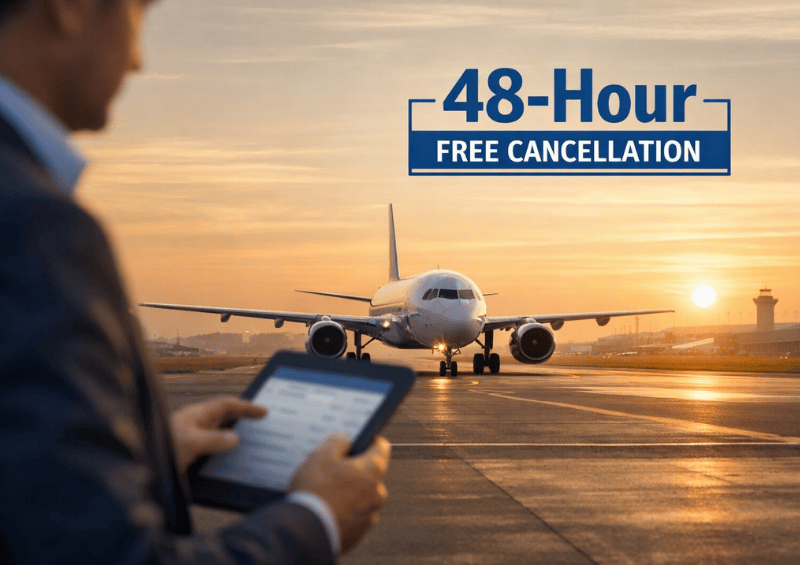
India’s DGCA mandates 48-hour free flight cancellations for IndiGo, Air India, Emirates, Qatar Airways, AirAsia, Thai Airways and Singapore Airlines. A major shift for B2B travel agents, corporate planners and hospitality demand strategy.
A Landmark Move by India’s Aviation Regulator
India’s aviation ecosystem is entering a more flexible era. The Directorate General of Civil Aviation (DGCA) has introduced a rule requiring airlines operating in India to allow free cancellation or amendment within 48 hours of booking, subject to defined conditions.
Major carriers including:
IndiGo
Air India
Emirates
Qatar Airways
AirAsia
Thai Airways
Singapore Airlines
are aligning with the directive, making booking flexibility a new competitive standard in the Indian market.
For B2B travel agents and consolidators, this is not just a passenger-friendly policy — it’s a commercial opportunity.
What Exactly Has Changed?
Under the revised framework:
Passengers can cancel or modify tickets within 48 hours of booking without penalty
Fare differences still apply if the new flight is costlier
Certain conditions may apply (such as booking a minimum number of days before departure)
This mirrors international best practices and reduces the psychological barrier associated with non-refundable fares.
Why This Matters for B2B Travel Professionals
Higher Booking Conversion Rates
Clients hesitate when fares are non-refundable. With a 48-hour safety window, agents can confidently push early confirmations — especially for group departures and corporate travel.
For platforms like AgentBazar focusing on fixed departures and series fares, this flexibility can:
Reduce booking friction
Encourage advance group blocking
Increase upsell acceptance
Corporate Travel Gets a Boost
Corporate planners often delay ticketing due to approval cycles. Now:
Travel desks can secure seats early
Finance teams get breathing room
Cancellation risk reduces within the first 48 hours
This is particularly impactful on metro routes like Delhi–Mumbai, Bengaluru–Dubai, and long-haul corporate corridors.
Positive Spillover to Hospitality
Flexible air tickets naturally influence hotel bookings.
Destinations such as:
Goa
Kerala
Rajasthan
Uttarakhand
are likely to see:
Longer average stay durations
Increased off-season bookings
Faster conversion of bundled packages
For travel agents bundling air + hotel + transfers, this creates an ideal upsell environment.
Strategic Implications for Airlines
For airlines like IndiGo and Air India, this policy:
Improves customer trust
Encourages early inventory commitment
Supports dynamic pricing models
International carriers such as Emirates and Qatar Airways benefit by enhancing their appeal to Indian outbound travelers, especially on premium and long-haul routes.
Flexibility is becoming a competitive differentiator — not just a customer service feature.
How Travel Agents Should Leverage This Policy
Here’s a practical execution roadmap:
Promote “Risk-Free Booking Window” in Marketing
Use it in WhatsApp creatives, email campaigns, and landing pages.
Encourage Early Group Blocking
Ideal for fixed departures and series fares.
Align With Hotel Partners
Negotiate matching 24–48 hour soft-hold policies to create fully flexible packages.
Educate Corporate Clients
Position this as a compliance-friendly, cost-controlled booking strategy.
Expected Shift in Travel Patterns
The 48-hour rule may:
Increase advance booking volumes
Stimulate shoulder-season travel
Encourage spontaneous short-haul trips
Improve inbound confidence from US, UK, Australia, and Middle East markets
India strengthens its positioning as a flexible and globally competitive travel destination.
The Bigger Picture: A Structural Shift in Travel Confidence
This isn’t just a cancellation policy update. It signals:
Regulatory support for consumer protection
Greater transparency in airline pricing
Stronger alignment with global aviation standards
For B2B professionals, this means recalibrating sales scripts, automation flows, and package structures to capitalize on reduced booking hesitation.
Conclusion: A Timely Opportunity for Travel Trade
India’s 48-hour free flight cancellation mandate is more than a regulatory change — it’s a strategic lever for growth.
For travel agents, consolidators, and corporate planners, this creates:
Faster decision-making
Higher booking confidence
Better package conversion rates
Increased hospitality cross-sell potential
The agents who reposition this flexibility as a value-added selling point will capture stronger market share in 2026 and beyond.
Want more travel updates like this? Follow our updates at blog.agentbazar.in and transform how you support your clients at every stage of travel.
Follow us on Facebook, X (Twitter), Instagram, and YouTube for the latest travel updates and insights!
About the Agent Bazar Blog
The Agent Bazar Blog is your trusted source for industry news, airfare trends, visa updates, and insights tailored for B2B travel agents, consolidators, corporate travel planners, and tour operators.
Our goal is to support travel professionals with timely, actionable content that enhances business growth, improves efficiency, and keeps you informed in a fast-changing travel industry.
Explore our articles, stay ahead with vital updates, and make smarter decisions for your travel business.
About Agent Bazar
Agent Bazar is a next-generation series fare aggregator and B2B airfare marketplace in India, developed by Tripforu Holidays Pvt Ltd (est. 2016).
Backed by over 15 years of industry experience, the platform specializes in fixed departure fares across 300+ sectors in India and key Asian countries.
With a growing network of over 10,000 registered travel agents, Agent Bazar connects consolidators and sellers with agents through a zero-commission model, unlike traditional portals that charge 5–8% in fees.
The platform empowers travel agents and consolidators with direct access to reliable inventory, real-time fare discovery, and simplified group booking tools.
🌐 Visit: agentbazar.in