India Flight Cancellations: 26 Routes Disrupted Today
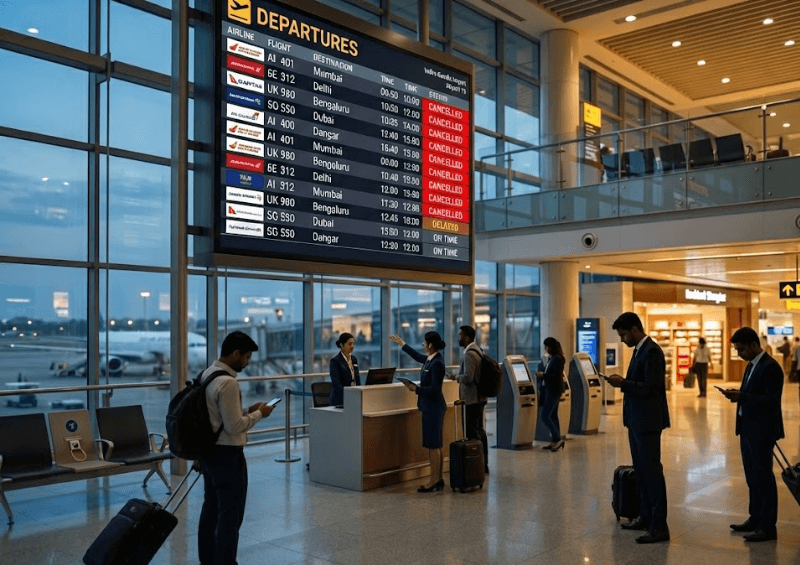
India is facing wide flight disruptions — dozens of cancellations at major hubs (Mumbai, Bengaluru, Delhi, Ahmedabad) and Gulf/Europe services affected. A practical briefing for travel agents, consolidators and corporate bookers with rebooking tips and client-facing messaging.

Introduction

On 4 December 2025 major Indian airports reported a cluster of cancellations affecting both domestic and international services — an aggregate list of 26 scheduled departures (Mumbai, Bengaluru, Delhi, Ahmedabad, Chennai, Kolkata, Cochin and others) has circulated among agent channels.

This wave sits alongside a larger industry disturbance: IndiGo reported very large-scale cancellations and delays nationwide — a separate operational crisis that has compounded rebooking pressure for agents and GDS/CRS inventory managers. 

Which routes and hubs were hit (practical snapshot)

The cancellations being circulated include both regional links (e.g., Ahmedabad–Mumbai, Chennai–Shivamogga, Delhi–Darbhanga) and long-haul services (e.g., Mumbai–Amsterdam, Bengaluru–London, Cochin–Abu Dhabi). Several of the specific flight numbers in your list (KLM KL878, Virgin/VS317, Akasa/AKJ586) show recent activity or were tracked in public flight-status feeds — useful for audit and proof-of-status when you communicate to clients.

Action: pull live status in your BSP/GDS or the airline PSS before messaging — public trackers can help but should not replace airline confirmations.

Why this is happening (short, actionable reasons)

  1. Airline operational strain: Several carriers — most visibly one of the largest LCCs — reported major crew/rotation and operational issues leading to hundreds of schedule disruptions across airports. This creates knock-on cancellations and aircraft/crew shortfalls in other carriers’ networks. 

  2. Weather/airspace hazards: Recent regional factors (e.g., volcanic-ash related disruptions in late Nov) forced select Gulf and regional services to be withdrawn temporarily — this continues to ripple across routings and wet-lease availability.

  3. Cascade effects through hubs: When a high-frequency operator cuts capacity, hub banks (Mumbai, Delhi, BLR) lose connectivity buffers and small airports feel the impact quickly.

Immediate steps for travel agents & consolidators

  • Verify before you notify. Use airline PNR / airline operations portals first; back up with flight-status tools only to illustrate timing.

  • Prioritize high-value clients. Re-accommodate corporate travellers, premium pax and multi-leg connections first — they have the largest cost & reputational exposure.

  • Offer concrete alternatives. Present 2–3 options (same-day earlier/later flight, alternate carrier, surface option) with fares and penalty notes. Agents who present solutions convert far better than those who only report problems.

  • Lock fare protection when available. Use holding requests, voluntary reissue options or waitlist tools in your CRS to protect commissions and client cost.

  • Document everything. Save screenshots of airline disruption notices, PNRs and call logs for refund/recovery claims.

Revenue & OPS considerations for B2B sellers

  • Reissue fees vs. goodwill: Sometimes waiving a small reissue surcharge secures conversion and long-term client retention. Make the economics clear to your finance team.

  • Block inventory planning: If your consolidator buys blocks on affected sectors, review exposure across your fixed-departure inventory and update seat allotments.

  • Claims readiness: Prepare tax invoices, boarding pass fragments and airline disruption advisories for refund/compensation claims.

Monitoring & data sources worth adding to your workflow

  • Airline operations pages / PSS / BSP dashboards (primary).

  • Flight-status aggregators (FlightAware, FlightRadar24, Trip.com) for playback and corroboration. 

  • Major news desks for systemic updates (IndiGo / network-level incidents were covered Dec 4, 2025).


Conclusion — what matters most for B2B travel pros

This disruption reinforces two durable truths:

(1) real-time verification from airline/PSS is mandatory before communicating to clients, and (2) proactive solution-selling (offer alternatives and lock inventory) is how agencies protect

revenue and client trust during network-wide incidents.

Be ready to escalate high-value cases quickly, keep documentation for claims, and use this disruption to demonstrate reliability to your corporate and retail partners.

Want more travel updates like this? Follow our updates at blog.agentbazar.in and transform how you support your clients at every stage of travel.

🌍 Stay Connected with the Travel Community

Follow us on Facebook, X (Twitter), Instagram, and YouTube for the latest travel updates and insights!

About the Agent Bazar Blog

The Agent Bazar Blog is your trusted source for industry news, airfare trends, visa updates, and insights tailored for B2B travel agents, consolidators, corporate travel planners, and tour operators.

Our goal is to support travel professionals with timely, actionable content that enhances business growth, improves efficiency, and keeps you informed in a fast-changing travel industry.

Explore our articles, stay ahead with vital updates, and make smarter decisions for your travel business.

About Agent Bazar

Agent Bazar is a next-generation series fare aggregator and B2B airfare marketplace in India, developed by Tripforu Holidays Pvt Ltd (est. 2016).

Backed by over 15 years of industry experience, the platform specializes in fixed departure fares across 300+ sectors in India and key Asian countries.

With a growing network of over 10,000 registered travel agents, Agent Bazar connects consolidators and sellers with agents through a zero-commission model, unlike traditional portals that charge 5–8% in fees.

The platform empowers travel agents and consolidators with direct access to reliable inventory, real-time fare discovery, and simplified group booking tools.

🌐 Visit: agentbazar.in