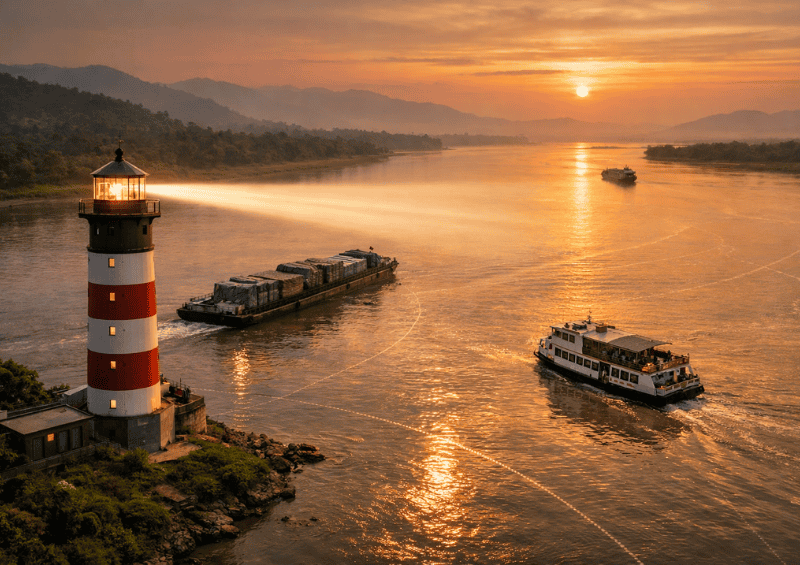
India is building modern riverine lighthouses along the Brahmaputra River to improve navigation safety, expand river tourism, and strengthen cargo transport across National Waterway-2 in Northeast India.
India Launches Riverine Lighthouse Project on the Brahmaputra
India is accelerating the modernization of its inland waterways with the construction of riverine lighthouses along the Brahmaputra River.
The initiative is designed to improve navigation safety, promote river tourism, and enhance cargo transportation across the northeastern region.
For travel professionals and logistics planners, the development signals a major step toward transforming the Brahmaputra corridor into a strategic tourism and trade route.
The river is already one of the most important waterways in Asia. Now, with advanced navigation infrastructure, it is set to become an even stronger transportation and tourism asset for India.
Strategic Locations for the New Lighthouses
The government plans to install four riverine lighthouses at key locations along the Brahmaputra corridor:
Bogibeel
Pandu
Silghat
Biswanath Ghat
These sites lie along National Waterway-2, an 891-kilometre inland waterway stretching from Dhubri to Sadiya in Assam.
National Waterway-2 is already India’s longest navigable river route, supporting passenger ferries, cargo vessels, and growing tourism activity.
Once operational, the lighthouse network will allow vessels to navigate the river more safely during night operations and low-visibility weather conditions.
Improving River Navigation and Vessel Safety
River navigation along the Brahmaputra can be challenging due to strong currents, seasonal flooding, and constantly shifting channels.
The new riverine lighthouses aim to reduce these risks.
Each lighthouse will:
Stand approximately 20 meters tall
Provide a geographical range of around 14 nautical miles
Deliver a luminous range between 8–10 nautical miles
This system will significantly improve visibility for cargo ships, ferries, cruise vessels, and tourist boats operating along the waterway.
In addition, the installations will include weather monitoring sensors that track atmospheric and river conditions. These sensors will provide valuable navigation data for vessel operators.
Importantly, the entire system will operate on solar energy, supporting India’s broader push toward green infrastructure and sustainable transport.
Tourism Development Along the Brahmaputra River
Beyond navigation, the lighthouse project also has a strong tourism vision.
Each lighthouse site is planned to evolve into a riverfront tourism hub, offering visitors cultural and recreational experiences along the Brahmaputra.
Proposed visitor facilities include:
River museums explaining navigation history
Cultural amphitheatres for local performances
Cafés and waterfront promenades
Landscaped parks and family spaces
Souvenir shops promoting local handicrafts
These attractions will transform the riverbanks into tourism destinations rather than just transport points.
For domestic travellers and international visitors, the Brahmaputra corridor will become a new destination for river experiences, photography, and cultural exploration.
National Waterway-2 Strengthens Trade and Logistics
The Brahmaputra corridor already plays a crucial role in regional trade and cargo movement.
Industries across Northeast India rely on the waterway to transport:
Tea exports
Fertilisers
Coal
Construction materials
Agricultural goods
Recent government data shows that cargo traffic on National Waterway-2 increased by more than 50% during FY 2024–25, highlighting the rising importance of inland water logistics.
With improved navigation systems, businesses can expect:
Faster cargo transport
Lower logistics costs
Increased vessel traffic
Improved supply chain reliability
For travel agents and tourism operators, the improved infrastructure also means more opportunities for river cruise operations and passenger ferry services.
Sustainable Transport and Green Infrastructure
Inland waterways are among the most environmentally efficient transport systems.
Moving goods via river transport consumes less fuel and produces fewer carbon emissions compared with road or air transport.
The Brahmaputra lighthouse project reflects India’s commitment to low-carbon transport infrastructure.
Solar-powered navigation lights and eco-friendly tourism infrastructure will ensure the development remains aligned with sustainable tourism principles.
Protecting the river ecosystem remains essential, especially as the Brahmaputra region supports wetlands, wildlife reserves, and diverse ecosystems.
A New Opportunity for River Tourism in Northeast India
River tourism is gaining global attention, with cruise routes on rivers such as the Danube, Rhine, and Nile attracting millions of travellers each year.
India now aims to develop similar experiences on its major rivers.
The Brahmaputra offers exceptional potential due to its:
Dramatic landscapes
Wildlife habitats
Cultural heritage towns
Indigenous communities
Future tourism opportunities could include:
Multi-day river cruise itineraries
Wildlife and eco-tourism tours
Cultural heritage river journeys
Adventure and photography tours
For travel professionals, the Brahmaputra could soon become one of India’s most exciting emerging river tourism markets.
Project Timeline and Development Plan
The lighthouse initiative is currently progressing through its development stages.
Key milestones include:
Land transfer for project sites completed in mid-2025
Engineering design and surveys currently underway
Construction contracts expected to be awarded soon
Once construction begins, the project is expected to take approximately 24 months to complete.
After completion, the lighthouse network will guide vessels along the river while the surrounding tourism infrastructure opens to visitors.
What This Means for Travel Agents and Tourism Professionals
For B2B travel professionals, the Brahmaputra project signals new opportunities in river tourism and regional connectivity.
Key takeaways include:
Expansion of river cruise tourism in Northeast India
Development of new riverfront destinations
Improved transport access to Assam and nearby states
Growing opportunities for eco-tourism and cultural tourism packages
Travel agents and tour planners should start monitoring the region for future cruise routes, river tours, and experiential travel products.
Conclusion: The Brahmaputra’s New Tourism and Transport Era
India’s Brahmaputra riverine lighthouse project represents a powerful step toward modernizing inland waterways.
By combining navigation safety, green transport, tourism infrastructure, and regional trade development, the project will reshape how the river is used.
For travel agents, tourism planners, and logistics professionals, the Brahmaputra corridor is evolving into a strategic gateway for both tourism and commerce in Northeast India.
As infrastructure improves, the river could soon emerge as one of India’s most exciting travel and cruise corridors.
Want more travel updates like this? Follow our updates at blog.agentbazar.in and transform how you support your clients at every stage of travel.
Follow us on Facebook, X (Twitter), Instagram, and YouTube for the latest travel updates and insights!
About the Agent Bazar Blog
The Agent Bazar Blog is your trusted source for industry news, airfare trends, visa updates, and insights tailored for B2B travel agents, consolidators, corporate travel planners, and tour operators.
Our goal is to support travel professionals with timely, actionable content that enhances business growth, improves efficiency, and keeps you informed in a fast-changing travel industry.
Explore our articles, stay ahead with vital updates, and make smarter decisions for your travel business.
About Agent Bazar
Agent Bazar is a next-generation series fare aggregator and B2B airfare marketplace in India, developed by Tripforu Holidays Pvt Ltd (est. 2016).
Backed by over 15 years of industry experience, the platform specializes in fixed departure fares across 300+ sectors in India and key Asian countries.
With a growing network of over 10,000 registered travel agents, Agent Bazar connects consolidators and sellers with agents through a zero-commission model, unlike traditional portals that charge 5–8% in fees.
The platform empowers travel agents and consolidators with direct access to reliable inventory, real-time fare discovery, and simplified group booking tools.
🌐 Visit: agentbazar.in