Fly91 Signs 8-Year ATR Maintenance Deal Boosting Regional Aviation
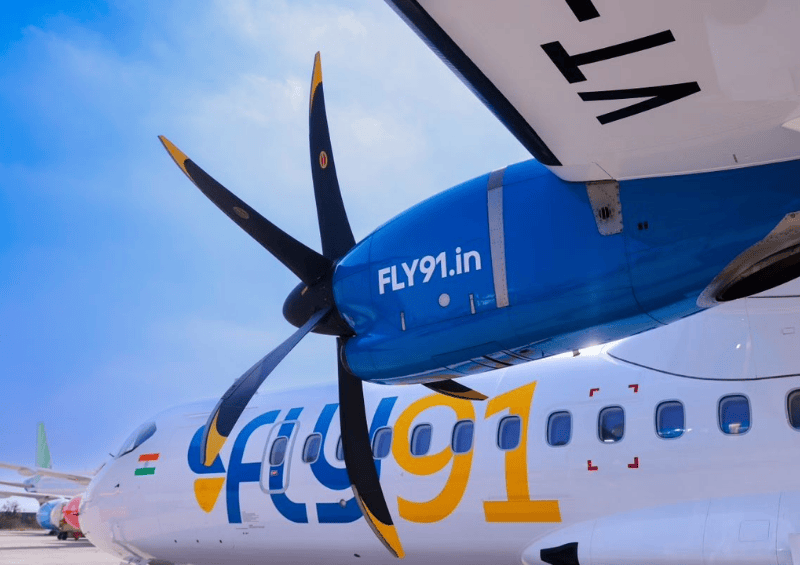
Fly91 signs an eight-year ATR maintenance agreement, reinforcing India’s regional aviation growth. Discover how ATR 72-600 fleet support boosts efficiency, cost control, and connectivity for regional airlines.

India’s regional aviation market is entering a decisive growth phase, and Fly91 has taken a major strategic step to support its expansion plans. The airline has signed a long-term, eight-year Global Maintenance Agreement (GMA) with ATR, the world’s leading manufacturer of regional turboprop aircraft.

For B2B travel professionals, consolidators, and airline partners, this agreement signals stronger operational reliability, predictable costs, and long-term confidence in India’s fast-growing regional air connectivity ecosystem.

A Strategic Move Backing Fleet Expansion

Launched in 2024, Fly91 currently operates four ATR 72-600 aircraft and plans to induct two additional units by early 2026.
The expanded maintenance partnership comes at a critical scaling stage, ensuring fleet availability and operational consistency as new regional routes are added.

Since May 2024, ATR has already been providing Fly91 with end-to-end maintenance support, including:

  • Component repair and overhaul services

  • Lease stock availability

  • Propeller and rotables support

  • Technical reliability management

Extending this arrangement into an eight-year framework gives Fly91 long-term cost visibility—an essential factor for regional airlines operating on thin margins.

Cost Stability and Operational Resilience

According to Fly91 leadership, predictable maintenance expenses and consistent technical support are central to building a sustainable regional airline model.
In an environment still affected by global supply-chain disruptions, long-term maintenance contracts reduce exposure to volatility and unplanned grounding risks.

For B2B travel agents and corporate planners, this translates into:

  • Improved schedule reliability

  • Fewer last-minute disruptions

  • Greater confidence when promoting regional routes

Supporting India’s Regional Connectivity Push

India’s regional aviation growth is closely aligned with government-led connectivity initiatives and rapid airport development in Tier-2 and Tier-3 cities.
Turboprop aircraft like the ATR 72-600 are increasingly preferred due to their:

  • Fuel efficiency on short-haul sectors

  • Ability to operate from smaller runways

  • Lower operating and maintenance costs

ATR’s GMA framework is specifically designed to help emerging airlines maintain global technical standards while keeping costs under control—an advantage as regional networks expand.

ATR’s Expanding Role in India’s Aviation Ecosystem

ATR continues to play a central role in India’s regional air transport strategy.
With one of the largest turboprop fleets operating in the country, ATR-supported airlines connect underserved cities, stimulate local economies, and improve last-mile air access.

For airline partners and B2B stakeholders, ATR-backed fleets typically deliver:

  • Higher aircraft availability

  • Optimized lifecycle costs

  • Environmentally efficient operations

These factors are increasingly important as sustainability and cost discipline become key decision drivers across the aviation value chain.

What This Means for B2B Travel Professionals

The Fly91–ATR agreement reflects a broader industry shift toward long-term, predictable operating models.
For travel agents, consolidators, and corporate travel managers, this development supports:

  • Reliable regional inventory planning

  • Stronger feeder connectivity into metro hubs

  • New opportunities in emerging city pairs

As more regional routes stabilize, B2B players can confidently build products around secondary markets with reduced operational risk.

Takeaway: A Strong Signal for India’s Regional Aviation Future

Fly91’s eight-year maintenance agreement with ATR is more than a fleet support deal—it is a strategic commitment to long-term growth, safety, and cost efficiency.
As India’s regional aviation market continues to mature, partnerships like this will define which airlines scale successfully and sustainably.

For the B2B travel ecosystem, the message is clear: regional connectivity in India is no longer experimental—it is becoming structurally strong, reliable, and commercially viable.

Want more travel updates like this? Follow our updates at blog.agentbazar.in and transform how you support your clients at every stage of travel.


🌍 Stay Connected with the Travel Community

Follow us on Facebook, X (Twitter), Instagram, and YouTube for the latest travel updates and insights!

About the Agent Bazar Blog

The Agent Bazar Blog is your trusted source for industry news, airfare trends, visa updates, and insights tailored for B2B travel agents, consolidators, corporate travel planners, and tour operators.

Our goal is to support travel professionals with timely, actionable content that enhances business growth, improves efficiency, and keeps you informed in a fast-changing travel industry.

Explore our articles, stay ahead with vital updates, and make smarter decisions for your travel business.

About Agent Bazar

Agent Bazar is a next-generation series fare aggregator and B2B airfare marketplace in India, developed by Tripforu Holidays Pvt Ltd (est. 2016).

Backed by over 15 years of industry experience, the platform specializes in fixed departure fares across 300+ sectors in India and key Asian countries.

With a growing network of over 10,000 registered travel agents, Agent Bazar connects consolidators and sellers with agents through a zero-commission model, unlike traditional portals that charge 5–8% in fees.

The platform empowers travel agents and consolidators with direct access to reliable inventory, real-time fare discovery, and simplified group booking tools.

🌐 Visit: agentbazar.in