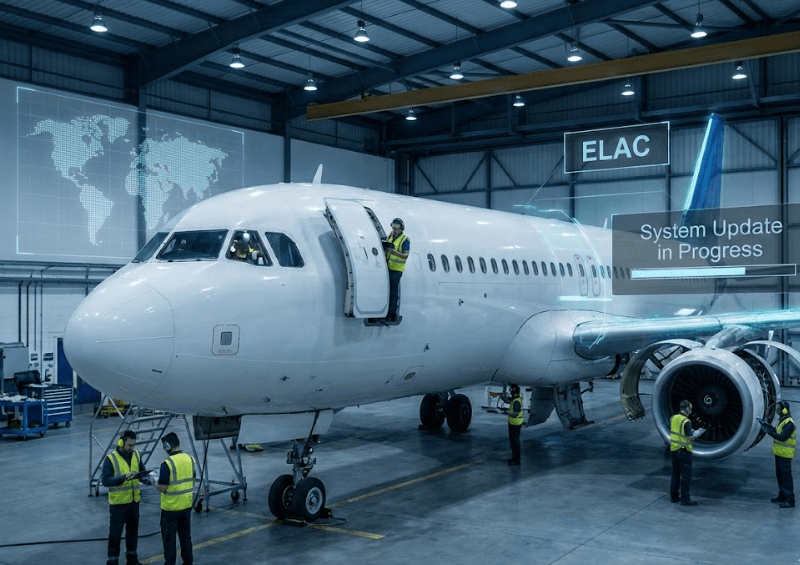
Airbus’ global A320 directive has triggered schedule disruptions across India. Learn why airlines are grounding aircraft, what caused the flight-control issue, and how travel agents should prepare during this temporary operational reset.
A Global Technical Alert Puts A320 Operations Under the Spotlight
Air travel across multiple routes in India is experiencing fresh delays after Airbus issued an urgent global technical directive for its A320 family aircraft.
Indian carriers, including IndiGo and Air India, have temporarily adjusted flight schedules and pulled parts of their fleets for mandatory software and hardware upgrades.
India’s aviation regulator has also stepped in, instructing airlines not to operate affected aircraft until modifications are fully completed—a rare but critical move emphasizing safety above all else.
What Triggered the Airbus Directive?
The directive follows a serious incident involving a JetBlue A320 on October 30, 2025, during a Cancun–Newark service. The aircraft unexpectedly pitched downward without any pilot input, forcing an emergency diversion to Tampa. Several passengers were hospitalised.
Investigators from the National Transportation Safety Board traced the event to a likely malfunction during an ELAC (Elevator Aileron Computer) switch change—a core component responsible for flight-control data.
Further analysis by Airbus revealed an alarming risk:
Intense solar radiation may corrupt certain flight-control data on specific A320 aircraft.
The European Union Aviation Safety Agency (EASA) issued an Emergency Airworthiness Directive, warning that if left uncorrected, the fault could lead to uncommanded elevator movement, potentially compromising structural limits.
What Airbus Has Asked Airlines to Do
Airbus has mandated a two-part corrective action depending on the aircraft’s age:
1. Software Upgrade (Newer A320 variants)
Can be completed within ~30 minutes
Applied through the aircraft’s loading facility
Minimal downtime
2. Hardware + Software Modification (Older A320s)
Requires additional component upgrades
Takes significantly longer, increasing ground time
More operational impact on schedules
Airbus acknowledged the disruptions, stating that while the fixes are precautionary, the global scale means short-term operational challenges are unavoidable.
How This Impacts India’s Aviation Operations
India operates one of the largest A320 fleets globally, making the directive particularly impactful.
IndiGo
Operates ~350 A320 family aircraft
Majority require only the quick software update
~250 aircraft will undergo updates over the weekend
Air India Group
Operates ~120–125 A320 aircraft
Over 100 aircraft expected to complete the reset by early next week
Airlines predict that schedules will stabilise by Monday or Tuesday, once the bulk of aircraft are updated and returned to service.
Both carriers have released public advisories acknowledging anticipated delays and urging passengers to check flight status frequently.
What Airlines Are Communicating
Air India’s Statement
“This will result in a software/hardware realignment on a part of our fleet, leading to longer turnaround time and delays to our scheduled operations.”
IndiGo’s Statement
“Safety comes first. We are proactively completing the mandated updates with full diligence and care, in line with all safety protocols.”
Both carriers emphasise that safety remains the top priority, and support teams are working around the clock for rebooking and assistance.
What Passengers (and Travel Agents) Need to Know
For travellers
Check flight status before leaving for the airport
Leave buffer time for connections
Expect short-term schedule changes or reassignments
For B2B travel agents & corporate travel planners
Proactively monitor airline advisories
Reconfirm client itineraries throughout the weekend
Prepare alternate routing options for high-priority travellers
Use airline APIs/portals for real-time visibility
Communicate expected delays early to reduce escalations
Globally, nearly 6,000 A320 aircraft will undergo the same procedure—making this one of the largest coordinated technical resets in commercial aviation history.
Final Takeaway for B2B Travel Professionals
This Airbus directive is a preventative safety action, not a long-term fleet issue. While the temporary grounding of A320s is affecting schedules, the upgrades will strengthen flight-control reliability across one of the world’s most important aircraft families.
For B2B professionals, proactive communication and itinerary management will be key to supporting clients until operations stabilise in the coming days.
Want more travel updates like this? Follow our updates at blog.agentbazar.in and transform how you support your clients at every stage of travel.
Follow us on Facebook, X (Twitter), Instagram, and YouTube for the latest travel updates and insights!
About the Agent Bazar Blog
The Agent Bazar Blog is your trusted source for industry news, airfare trends, visa updates, and insights tailored for B2B travel agents, consolidators, corporate travel planners, and tour operators.
Our goal is to support travel professionals with timely, actionable content that enhances business growth, improves efficiency, and keeps you informed in a fast-changing travel industry.
Explore our articles, stay ahead with vital updates, and make smarter decisions for your travel business.
About Agent Bazar
Agent Bazar is a next-generation series fare aggregator and B2B airfare marketplace in India, developed by Tripforu Holidays Pvt Ltd (est. 2016).
Backed by over 15 years of industry experience, the platform specializes in fixed departure fares across 300+ sectors in India and key Asian countries.
With a growing network of over 10,000 registered travel agents, Agent Bazar connects consolidators and sellers with agents through a zero-commission model, unlike traditional portals that charge 5–8% in fees.
The platform empowers travel agents and consolidators with direct access to reliable inventory, real-time fare discovery, and simplified group booking tools.
🌐 Visit: agentbazar.in