15 UDAN Airports Temporarily Shut: Latest Aviation Update
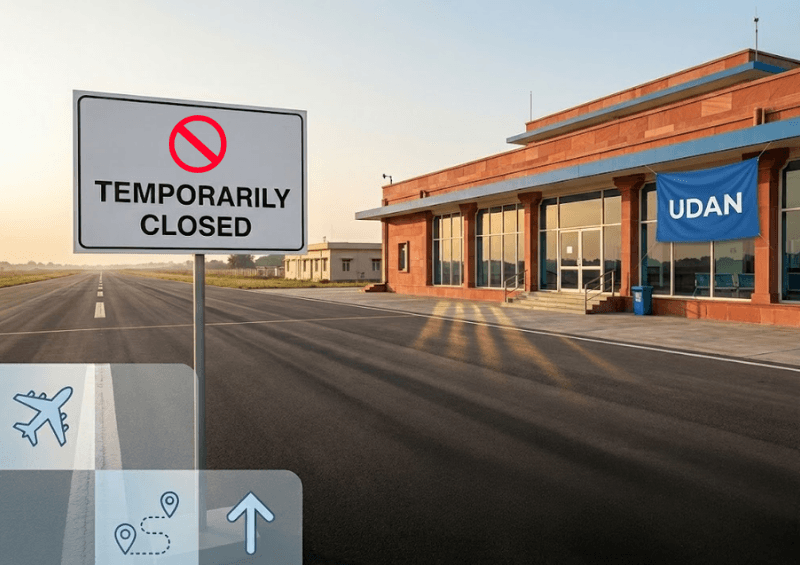
Fifteen airports developed under India’s UDAN regional connectivity scheme are temporarily non-operational due to low demand and airline constraints. Only four new airports currently have scheduled flights. Latest aviation update for travel agents.

India’s flagship UDAN (Ude Desh ka Aam Nagrik) programme was launched to strengthen regional air connectivity, boost economic access, and shorten long-distance surface travel. While the scheme has helped many tier-2 and tier-3 towns join the aviation map, 15 airports under UDAN are currently not handling flights, primarily due to operational and demand-related challenges.

The Ministry of Civil Aviation shared the latest update in a written reply to the Rajya Sabha, stating that these closures are temporary and subject to revival based on airline interest and route viability.

What UDAN Was Designed to Achieve

The UDAN scheme focuses on connecting underserved and unserved airports with affordable, subsidized regional flights.

Till date, the government has launched:

  • 651 UDAN routes across India

  • 93 airports, 15 heliports, and 2 water aerodromes

  • Several new routes enhancing last-mile air connectivity

Despite strong initial momentum, a number of airports face sustainability issues when subsidy periods end or demand does not pick up.

List of 15 UDAN Airports That Are Temporarily Non-Operational

These airports were activated under the UDAN programme but currently have no scheduled flights:

  • Pathankot

  • Pakyong

  • Kushinagar

  • Aligarh

  • Azamgarh

  • Chitrakoot

  • Shravasti

  • Moradabad

  • Bhavnagar

  • Ambikapur

  • Rourkela

  • Ludhiana

  • Datia

  • Kalaburagi

  • Shimla

Why Operations Stopped at These Airports

Multiple operational factors have contributed to the temporary suspension of flights:

1. VGF Support Period Expired

The Viability Gap Funding—a critical financial support for regional routes—typically lasts three years. After this period, many routes struggle to remain commercially viable.

2. Weather and Visibility Constraints

Airports operating strictly under Visual Flight Rules (VFR) face challenges during poor weather conditions, making regular operations difficult.

3. Runway Restrictions

Some airports have daytime runway closures due to maintenance or infrastructure upgrades, limiting airline operations.

4. Aircraft Shortage With Airlines

Several regional carriers face fleet limitations, leasing delays, and grounding issues.

5. Operational & Leasing Challenges

Smaller airlines operating UDAN routes face high operating costs and tight margins, impacting continuity.

6. Low Passenger Demand

Routes with insufficient traffic often fail to sustain long-term operations once subsidies expire.

Only Four Newly Inaugurated Airports Currently Have Flights

In the last five years, 11 new airports have been inaugurated across Uttar Pradesh, Bihar, and Jharkhand.
However, only four of them presently have scheduled airline operations:

  • Deoghar (Jharkhand)

  • Kanpur (Uttar Pradesh)

  • Ayodhya (Uttar Pradesh)

  • Purnea (Bihar)

The remaining newly opened airports are technically ready but do not have airline partners operating scheduled flights yet.

Impact on Travellers & Travel Businesses

For travel agents, consolidators, and corporate travel planners, these temporary suspensions highlight the volatility of regional aviation in India. Before offering UDAN-based travel options to clients:

  • Always verify route availability before confirming bookings

  • Expect seasonal adjustments or operational pauses

  • Monitor airline announcements for route reactivations

  • Keep backup surface travel solutions ready for remote regions

As demand increases and airlines regain fleet stability, many of these routes may reopen. The government has reiterated that none of these airports are permanently shut.

Conclusion: Regional Connectivity Is Evolving, Not Declining

The UDAN scheme remains one of India’s most ambitious aviation projects. While temporary disruptions exist, they reflect the transitional challenges of building a sustainable regional air network. For travel professionals, staying updated helps ensure seamless client servicing and better route planning.

Want more travel updates like this? Follow our updates at blog.agentbazar.in and transform how you support your clients at every stage of travel.

🌍 Stay Connected with the Travel Community

Follow us on Facebook, X (Twitter), Instagram, and YouTube for the latest travel updates and insights!

About the Agent Bazar Blog

The Agent Bazar Blog is your trusted source for industry news, airfare trends, visa updates, and insights tailored for B2B travel agents, consolidators, corporate travel planners, and tour operators.

Our goal is to support travel professionals with timely, actionable content that enhances business growth, improves efficiency, and keeps you informed in a fast-changing travel industry.

Explore our articles, stay ahead with vital updates, and make smarter decisions for your travel business.

About Agent Bazar

Agent Bazar is a next-generation series fare aggregator and B2B airfare marketplace in India, developed by Tripforu Holidays Pvt Ltd (est. 2016).

Backed by over 15 years of industry experience, the platform specializes in fixed departure fares across 300+ sectors in India and key Asian countries.

With a growing network of over 10,000 registered travel agents, Agent Bazar connects consolidators and sellers with agents through a zero-commission model, unlike traditional portals that charge 5–8% in fees.

The platform empowers travel agents and consolidators with direct access to reliable inventory, real-time fare discovery, and simplified group booking tools.

🌐 Visit: agentbazar.in